Validation of the digital twin
Today, 3D models are used in all divisions of CLAAS Tractor.
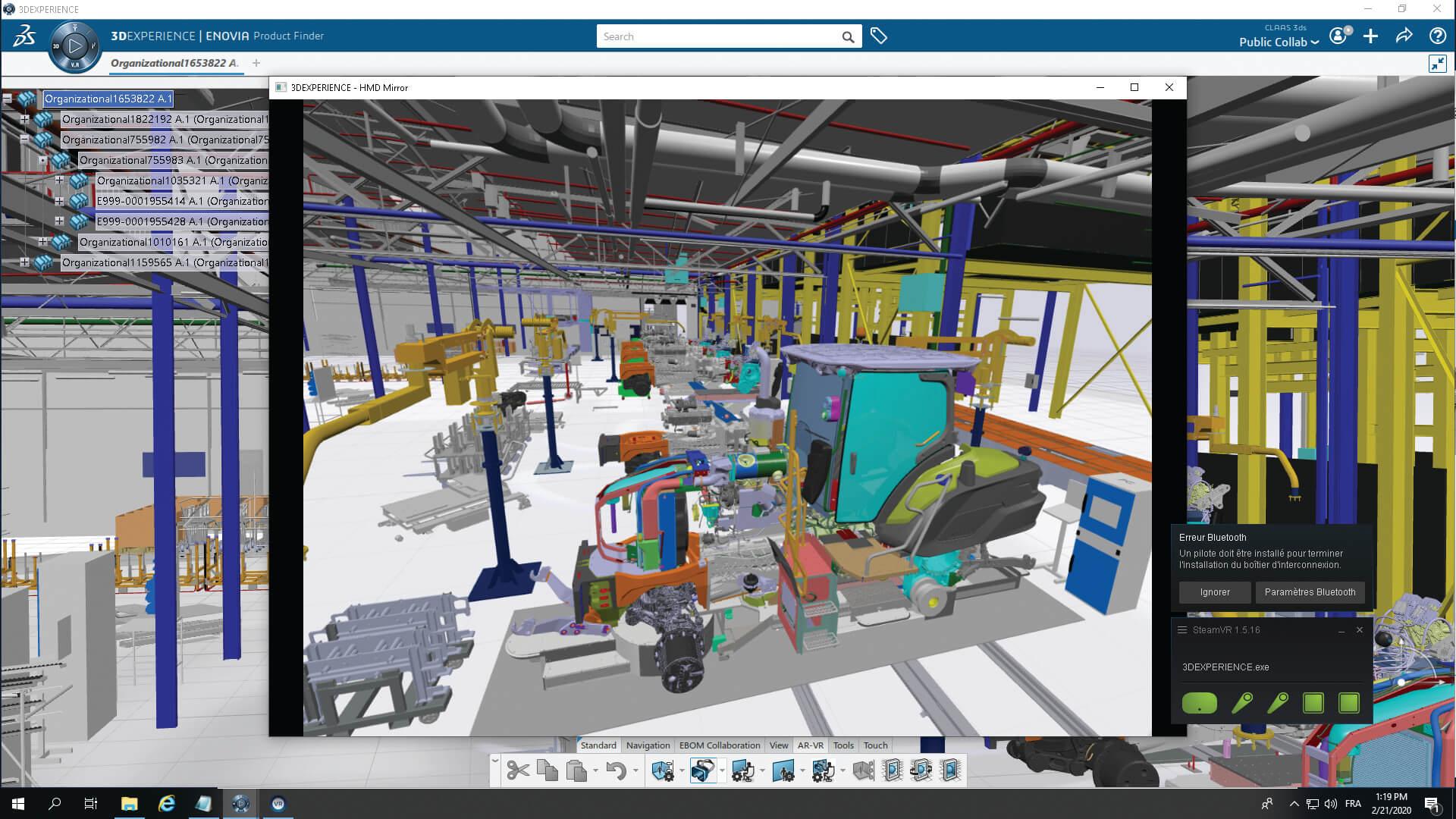
“The 3D EXPERIENCE platform enables the use of 3D at all levels of the company,” Bruno said. — Workers get a complete picture of their future work environment in the virtual space and understand how products will be assembled and equipment will be operated. The plant manager can make the right decisions about materials and maintenance. And the client can see the product ordered by him with all the options even before it is manufactured.”
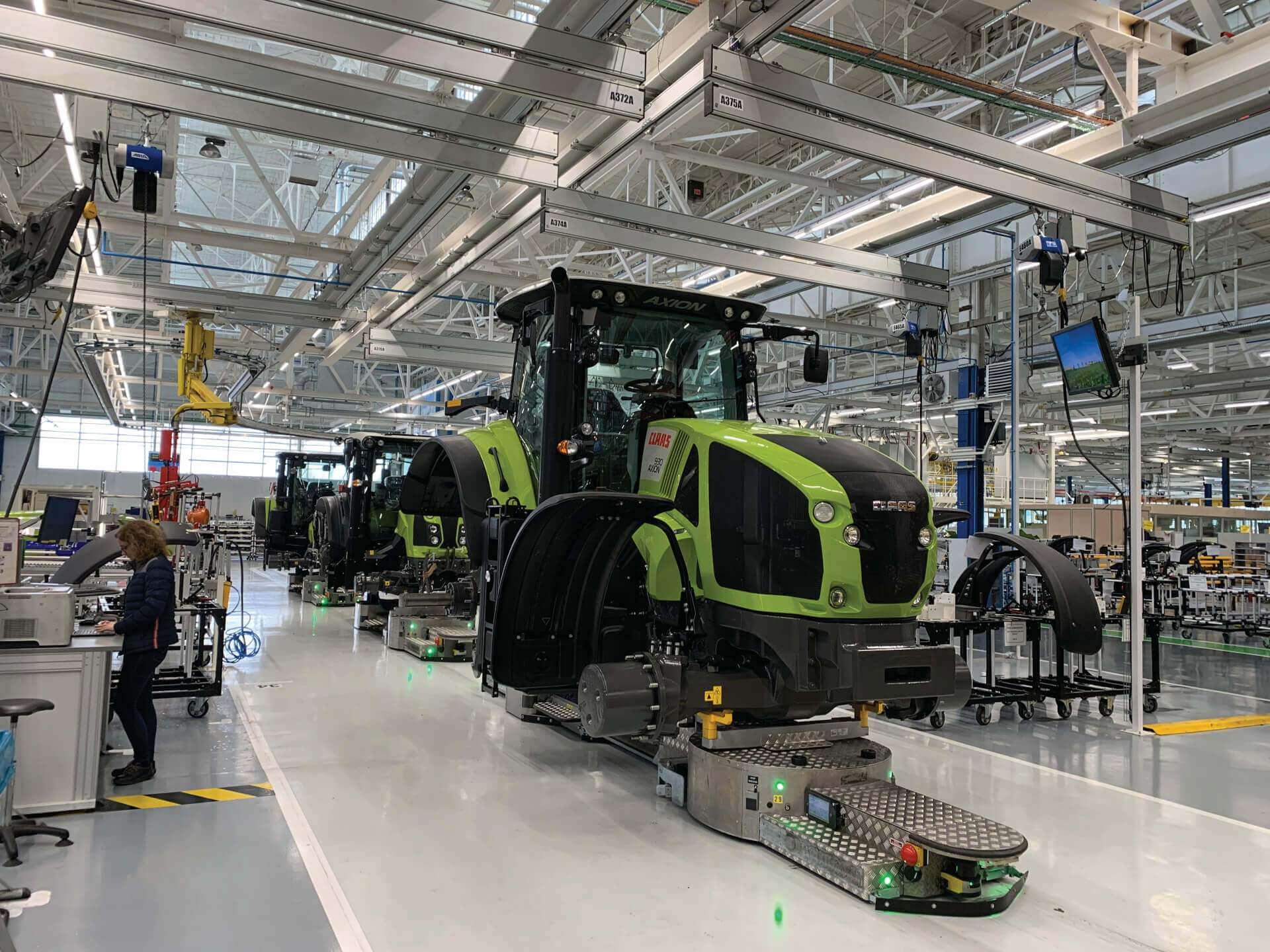
Having virtual digital twins of both products and the plant itself is particularly helpful during the transition from design to production at CLAAS Tractor, ensuring that all components can be produced at the Le Mans plant with existing equipment and that they will actually fit finished product.
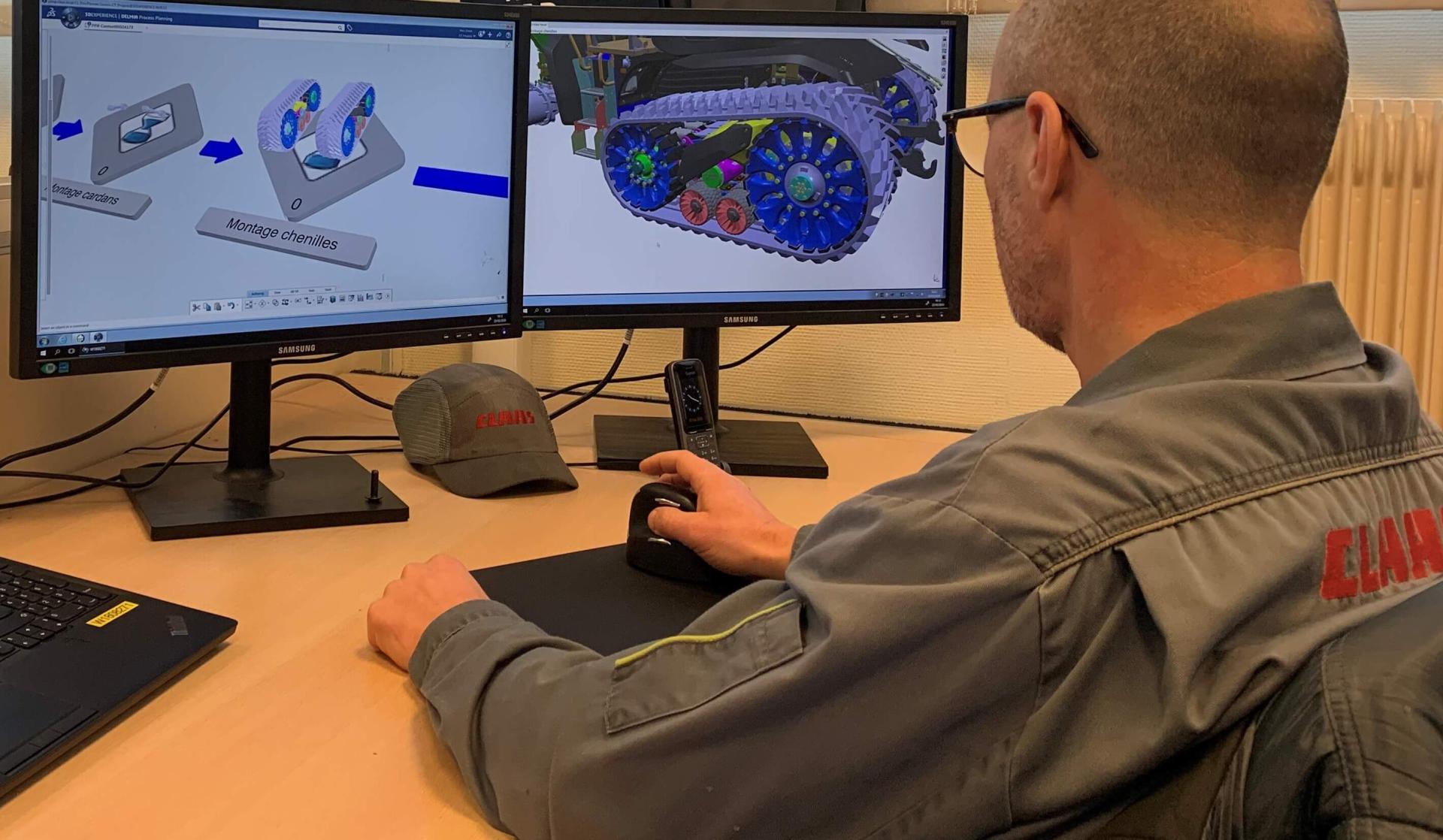
“We model in 3D various parts of the tractor, such as sheet metal, hydraulic pipes and electrical harnesses,” said Dufour. “Then we send the 3D model to the factory to be 100% sure that these parts can be assembled. To create tractor parts in the design department, we use the CATIA solution. When laying out, we mainly use the "Mechanical Design" function, which allows us to display the kinematic diagram of the tractor. This makes it possible to shape the moving parts in 3D, making sure they don't interfere with other parts of the tractor when it's in operation."
“When it comes to the Panten project, we were able to work with ease, with teams spread all over the world during the pandemic,” said Gal. — Anyone can connect to the platform remotely from anywhere. This saved people time and allowed them to focus on their tasks, as they no longer had to constantly ask questions like: “Where are you now?” or “Did you do it?” The 3D EXPERIENCE platform contains all the information. In addition, we benefit from constant updates, knowing that we are working with the latest version of the solution.”
This approach also helps the design team manage changes effectively and fix bugs quickly.
“Architects often use volume filters,” Dufour said. “For example, when an assembly problem or damage is reported, the part needs to be changed. The volume filter highlights the area around the selected part. The platform then displays all the parts that have fallen into the volume, so that we can be sure that we have not forgotten any of the structural elements and have not interfered with the work of neighboring parts.”