CLAAS Tractor

CLAAS Tractor designs and manufactures tractors for the CLAAS Group, one of the world's leading manufacturers of agricultural machinery. As part of its plant modernization strategy, the company is using the 3D EXPERIENCE platform to effectively manage the increasing complexity of its products, optimize assembly line operations, and digitally plan and control production with full traceability.

Easy processing and sustainable farming

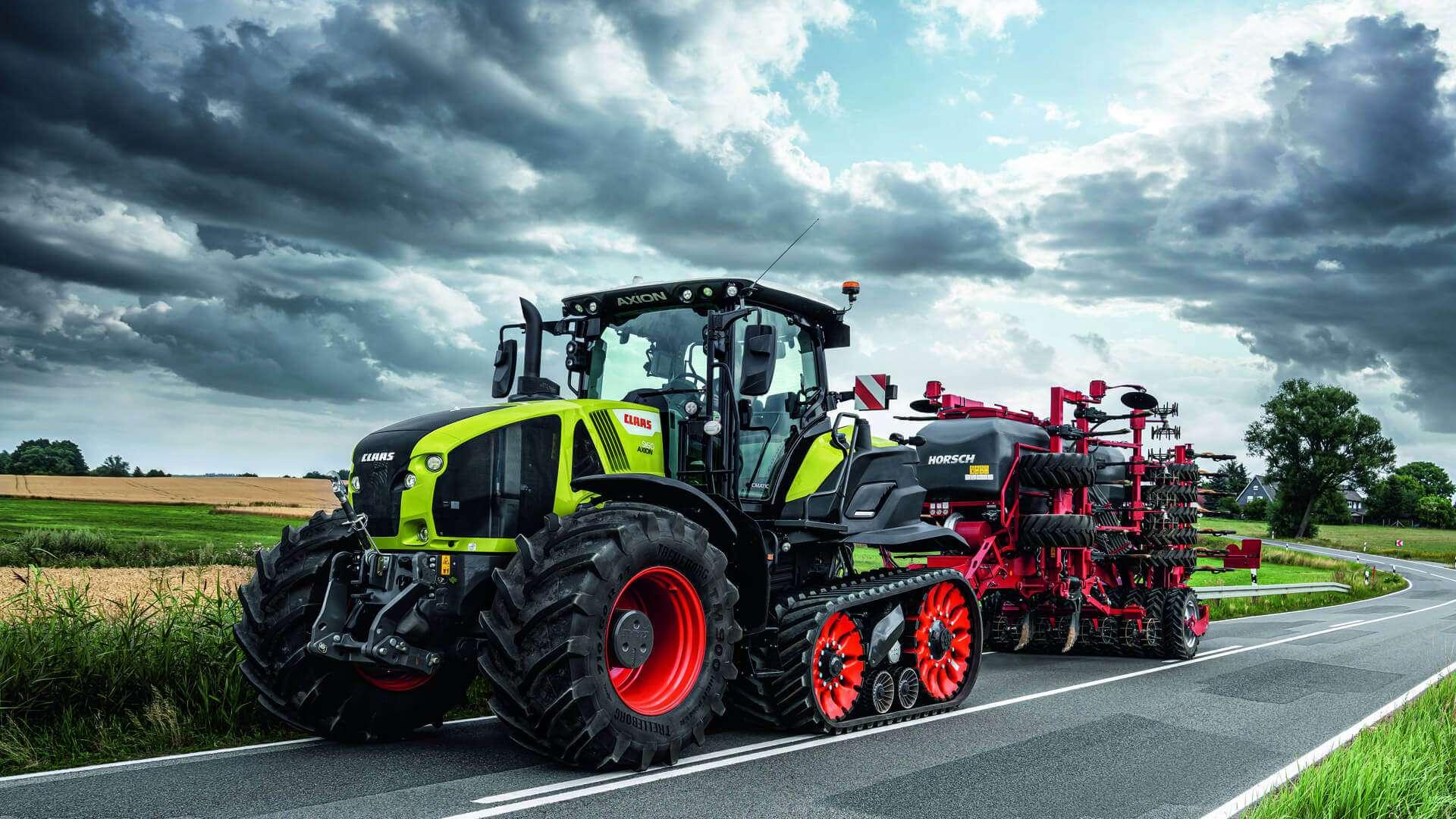
The CLAAS AXION 900 TERRA TRAC is a new product range that combines the rear track system typically used in combine harvesters with more traditional drive wheels at the front. It is the first full-suspension half-track tractor on the market that combines the convenience of a standard tractor with the benefits of a tracked tractor in terms of traction and soil protection. The large track contact area reduces soil compaction, helping farmers improve soil quality and increase yields in a more sustainable way. The AXION 900 TERRA TRAC tractors are manufactured at the CLAAS Tractor plant in Le Mans, France, and are the first company product to be built on a completely modernized assembly line. CLAAS Tractor, which manufactures around 8,000 tractors a year for the CLAAS Group, has made major improvements to its plant as it seeks to improve product quality, increase output and cope with increasing production complexity.

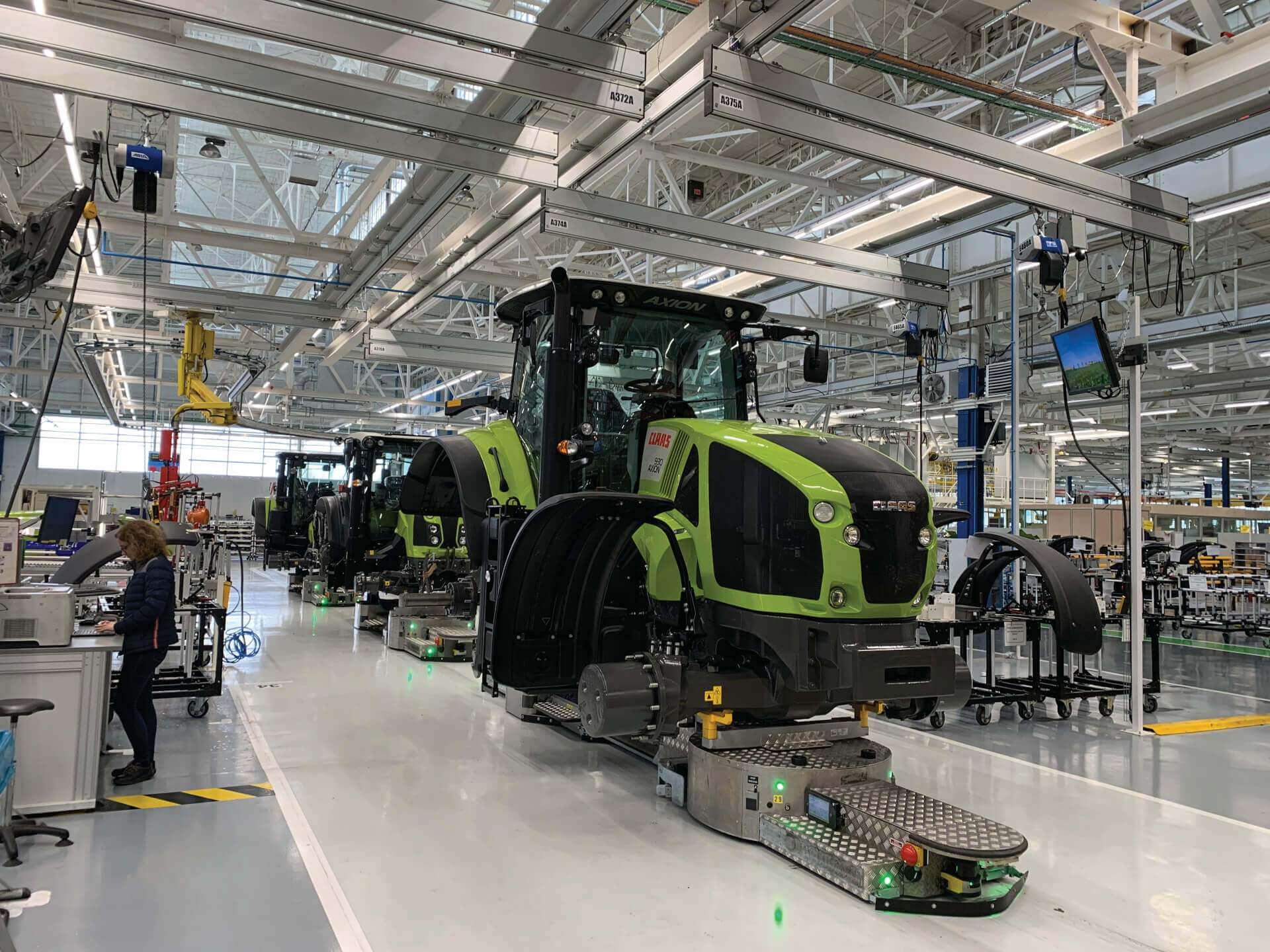
“Before, the factory was very ordinary: dimly lit workshops with cramped workplaces, where workers had to wait for parts to arrive on the assembly line,” says Etienne Bourasseau, director of industrial affairs at CLAAS Tractor. “Today, workplaces are much more spacious, ergonomic and open. Now we offer the best working conditions and therefore are able to guarantee the highest quality of service.” Today, the Le Mans plant is one of the most modern tractor manufacturing facilities in Europe. It won the Vitrine Industrie du Futur (Showcase of the Industries of the Future) award, presented by the French national organization Alliance Industrie Du Futur (Alliance of the Industries of the Future), together with the French Ministry of Industry.

“Winning this award shows that our assembly line is at the forefront of technology and that we have installed the production equipment necessary to produce high quality, affordable products made in France,” said Bourasso. “It sends a powerful signal to our customers, building our image as a top-notch organization both in terms of products and methods of operation.”

The factory of the future must integrate products that are yet to be created and that no one has yet imagined.
Etienne Bourasso

Production Director, CLAAS Tractor

Engineered to Fly

Virtualization for Modernization

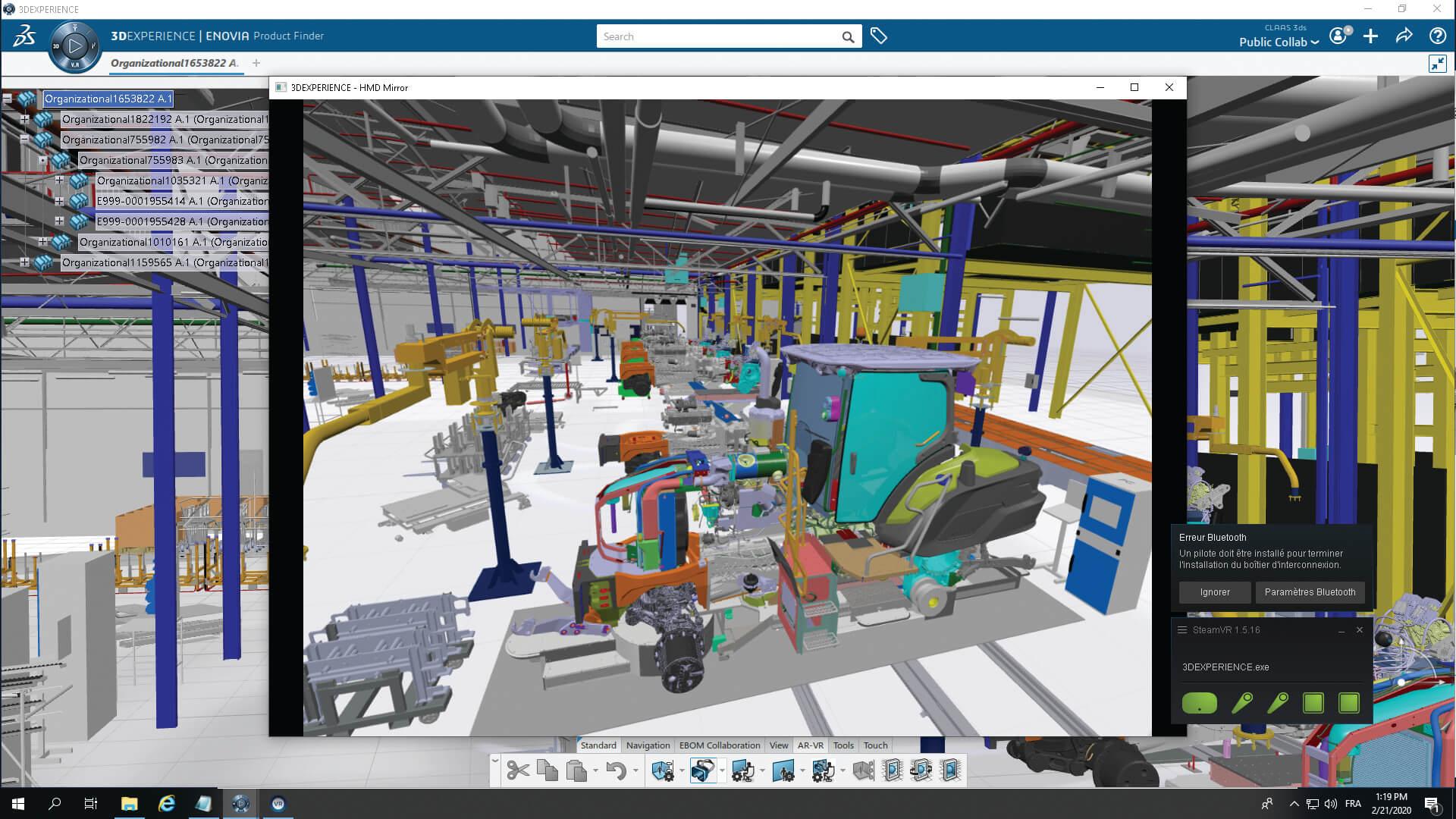
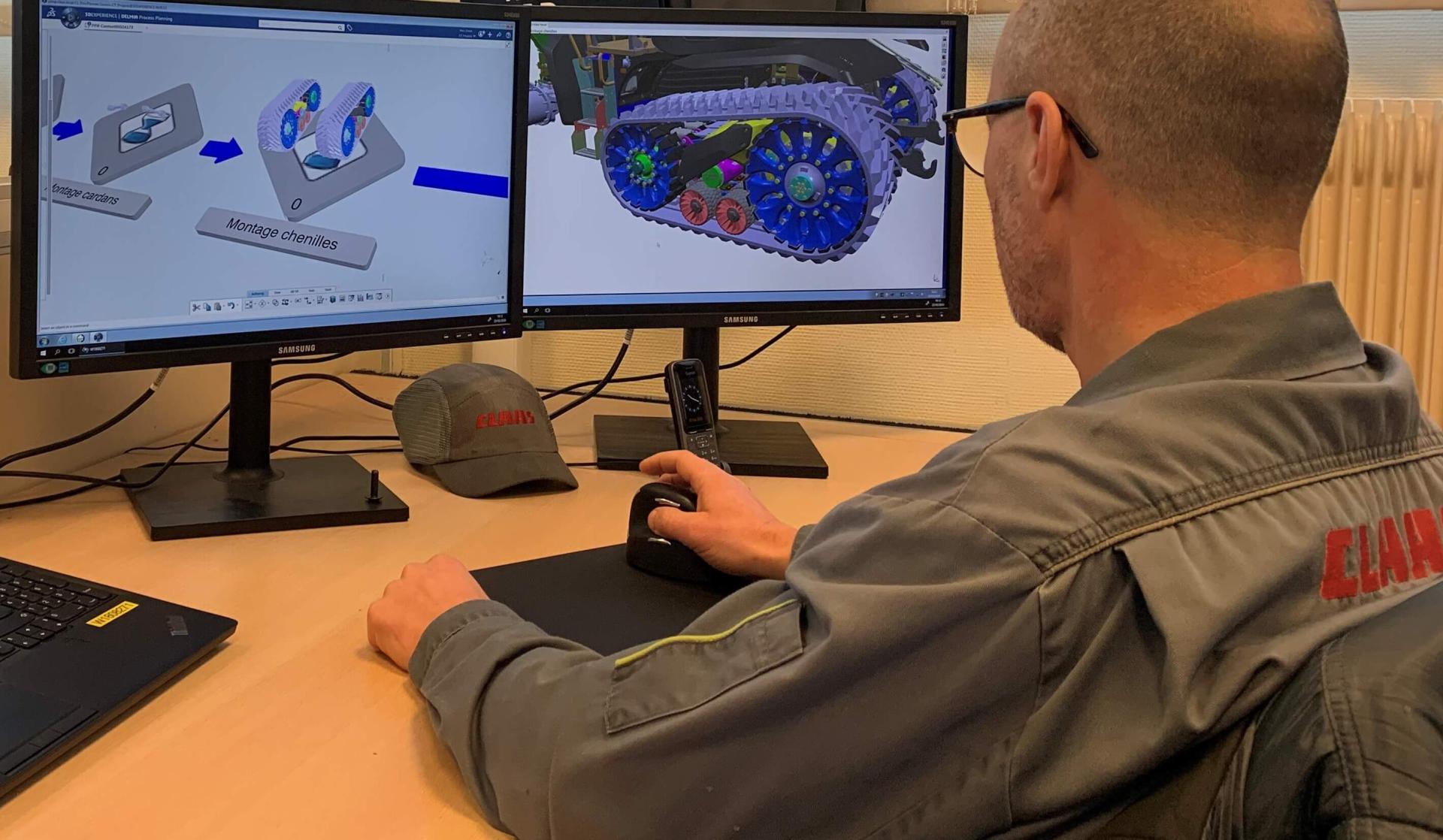
At the heart of today's CLAAS Tractor facility is a new technology platform that enables the company to implement innovative design and manufacturing methods, including 3D and simulation. The company has been using Dassault Systèmes' CATIA design application for a long time and decided to implement the 3D EXPERIENCE® platform as well as the ENOVIA information management system to ensure digital data continuity across departments. At the same time, she chose DELMIA to create a virtual model of her assembly line in order to improve product quality, increase output and manage an increasingly complex and varied assortment. CLAAS Tractor has digitized its factory with the development of the AXION 900 TERRA TRAC, the first machine designed and built using the 3D EXPERIENCE platform.

“The factory of the future must integrate products that are yet to be created and that no one has yet imagined,” said Bourasso. “This is the first time that tracks have been built on our assembly line. Building 3D views with the platform allowed us to see how we could adapt a process previously created for four-wheel tractors to the new model of a tracked tractor.” By developing a new model in 3D, designers and engineers can evaluate the feasibility of the new design and set up the assembly line before production begins.

“The 3D EXPERIENCE platform played a key role in creating the plant model, as all production aspects, such as lifting and clamping fixtures, could be verified virtually,” said Nathan Dufourg, CLAAS Tractor Design Engineer. — We were able to adjust the project to take into account the new equipment installed at the plant. Thus, the rear tracks of the AXION 900 TERRA TRAC completely change the configuration of the tractor. Because they are longer than the tires, the tanks had to be moved over the tracks next to the cab. We had to lift them up to mount them on the tractor. The transition of the new plant to digital technology gave us the opportunity to make sure that this is real.”
Engineered to Fly

Complexity management

CLAAS Tractor builds machines for customers all over the world, resulting in special, unique challenges. “The agricultural tractor market is very complex and diverse. A variety of requests come from Europe, Asia and North America,” Burasso admitted. “We have to deal with seasonality, which causes significant fluctuations in orders. In addition, the technologies embedded in our products are becoming more and more complex.”

One of the company's main goals with the introduction of the new technology platform was to find the best way to manage the growing complexity of products, which would allow to satisfy individual customer requests better and faster, while reducing the burden on staff. “It is extremely rare for us to produce two identical tractors in the same year,” said Franck Bruneau, Process Architect for CLAAS Tractor. “We always have about 20 different models with over 300 options on the same assembly line. This means that each product is a unique assembly unit. The 3D EXPERIENCE platform was the only way to plan the integration of specific options and the entire production process well in advance.”

The use of the 3D EXPERIENCE platform allows CLAAS Tractor to take into account the individual wishes of customers in the early stages of development and provide ways to implement them during assembly. “Using this platform, customers themselves configure each tractor when they place an order,” said Marc Dassé, CLAAS Tractor Technician for Process Methods. “During the ordering process, the customer sees what the tractor will look like with the selected options, as well as the modified assembly process. It's very simple."

With the simulation capabilities of DELMIA products, engineers can determine how each product will be manufactured and detect any problems before they occur. “The platform allows us to simulate, validate and optimize different build options for different options,” said Bourasso. “Then we can make sure that each of the combinations will not cause problems during assembly. In addition, we can control the compliance of the product with technological requirements at the workplace.”

Since the introduction of the 3D EXPERIENCE platform, we have had fewer redesigns due to process issues.
Frank Bruno

Process Architect, CLAAS Tractor

No pancakes lumpy

Frank Bruno and his team are responsible for shaping the production process for each tractor. Bruno claims that since the introduction of the 3D EXPERIENCE platform and ENOVIA collaboration tools, it has become easier to plan ahead and collaborate effectively with the R&D department, and has also significantly reduced the number of errors. “The platform allows process engineers to design products together with design engineers, predict assembly options, and improve the quality of processes and products,” said Bruno.

Close cooperation between process and design specialists is especially important given that the company's design office is located in Velizy-Villacoublay, 200 kilometers from the Le Mans production. “The platform makes it possible to exchange data in a single environment and coordinate the work of design bureau employees and technologists located at different sites,” Bruno said. “It promotes communication and has helped us collaborate on product and process development.”

The design engineers created the AXION 900 TERRA TRAC tractor and handed over the 3D model to the production engineers at Le Mans. The technologists then checked the assembly process of the new tractor on the virtual assembly line and reported any problems they found to the engineering department. Ensuring a seamless digital process throughout the product life cycle allows everyone to perform to the best of their ability and build flawless machines the first time.

“For us, digital data continuity is an asset,” Bourasso said. - It provides a link between product designers and assembly line workers who will use the work instructions. The platform provides an opportunity to check whether the design is technologically feasible by the workers of the assembly line and whether it meets the technological requirements, ergonomics and quality requirements throughout the entire development cycle of our tractors.”

Engineered to Fly

Validation of the digital twin

Today, 3D models are used in all divisions of CLAAS Tractor. “The 3D EXPERIENCE platform enables the use of 3D at all levels of the company,” Bruno said. — Workers get a complete picture of their future work environment in the virtual space and understand how products will be assembled and equipment will be operated. The plant manager can make the right decisions about materials and maintenance. And the client can see the product ordered by him with all the options even before it is manufactured.”

Having virtual digital twins of both products and the plant itself is particularly helpful during the transition from design to production at CLAAS Tractor, ensuring that all components can be produced at the Le Mans plant with existing equipment and that they will actually fit finished product. “We model in 3D various parts of the tractor, such as sheet metal, hydraulic pipes and electrical harnesses,” said Dufour. “Then we send the 3D model to the factory to be 100% sure that these parts can be assembled. To create tractor parts in the design department, we use the CATIA solution. When laying out, we mainly use the "Mechanical Design" function, which allows us to display the kinematic diagram of the tractor. This makes it possible to shape the moving parts in 3D, making sure they don't interfere with other parts of the tractor when it's in operation."

“When it comes to the Panten project, we were able to work with ease, with teams spread all over the world during the pandemic,” said Gal. — Anyone can connect to the platform remotely from anywhere. This saved people time and allowed them to focus on their tasks, as they no longer had to constantly ask questions like: “Where are you now?” or “Did you do it?” The 3D EXPERIENCE platform contains all the information. In addition, we benefit from constant updates, knowing that we are working with the latest version of the solution.”

This approach also helps the design team manage changes effectively and fix bugs quickly. “Architects often use volume filters,” Dufour said. “For example, when an assembly problem or damage is reported, the part needs to be changed. The volume filter highlights the area around the selected part. The platform then displays all the parts that have fallen into the volume, so that we can be sure that we have not forgotten any of the structural elements and have not interfered with the work of neighboring parts.”

Engineered to Fly

Improving understanding and learning

The transition from paper-based 2D processes to 3D digital simulation has revolutionized the way CLAAS Tractor works. “We used to prototype the tractor in the test room to describe the assembly process on paper and sort the documentation into folders according to the BOMs for each product,” said Dasse. “We also used this paper documentation to train workers and update operational documentation. Updating processes took place with great creaking. With the 3D EXPERIENCE platform, we can predict assembly operations with visibility tools and test assemblies to parts and without a physical prototype. The workers really appreciate it.”

It is now much easier for CLAAS Tractor to train workers and prepare them for the new models. “Today, thanks to DELMIA, we are one step ahead,” said Dasse. “I can see the tractor manufacturing process in detail, and workers can learn and understand assembly processes before the tractor is physically built.” The ability to provide virtual models of the new plant and design information for future tractors has also helped CLAAS Tractor to engage its employees in the company-wide digital transformation.

“The AXION 900 TERRA TRAC was designed to be assembled on the planned assembly line, but the workers couldn't imagine the process ahead,” Dasse said. “When they were able to see 3D models of the tractor and factory, they quickly realized that the new approach would be much more transparent and fluid.”

Empowerment

Since the implementation was successful, it is now planned to extend the new CLAAS Tractor capabilities to other organizations and plants within the CLAAS group. “This is a pilot project for the CLAAS Group, which will be implemented in other factories where a product development department exists,” said Bruno. “In my opinion, this decision made it possible to innovate at CLAAS Tractor, to unite departments with the same data and to anticipate the production process, not to grind it out.”

“To summarize this transformation, I would say that it was about passion, amazing new tools, openness to innovative solutions, but mainly in achieving our goal of serving customers by providing them with the best products,” Bourasso concluded.

Focus on CLAAS Tractor

CLAAS Tractor is part of the CLAAS Group, one of the world’s leading agricultural machinery manufacturers. Based in France, the company designs and produces a wide range of tractors, selling its products to agriculturalists worldwide. For more information: http://www.claas.com

Talk to an EXALEAD expert today!